
Home Water Purification Systems Explained
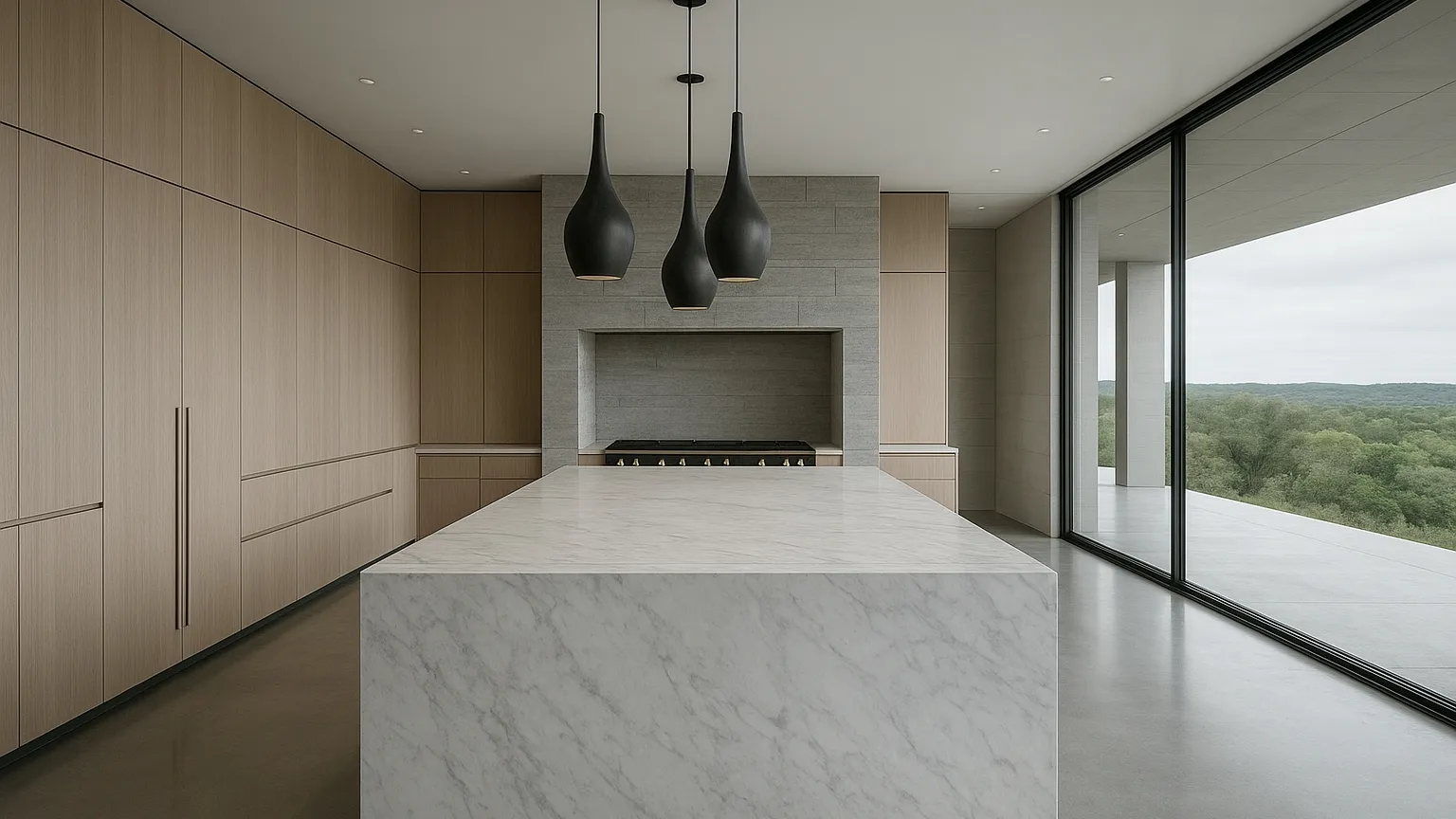
A water purification system for home use is the last layer of treatment between your incoming water supply and the glass on your counter – the stage that turns clean water into drinking-quality water. In a $3M to $20M custom build, it sits downstream of whole-house filtration, polishes whatever the filters leave behind, and feeds the kitchen tap, the pot-filler, the under-counter chiller, and the ice maker on the panel-ready refrigerator. We get asked about it on almost every Austin and Hill Country project, usually right after the homeowner tastes their well water for the first time or notices the chloramine smell from the municipal line. This guide covers what we actually specify, why, and how it integrates with the rest of the mechanical package.
What Is a Water Purification System for Home Use?
A water purification system for home use is a point-of-use or whole-home treatment assembly that removes dissolved solids, disinfection byproducts, and microbiological contaminants from already-filtered water to drinking-water quality. Unlike a sediment or carbon filter, which physically traps particles, a purification system actively treats the water – typically through reverse osmosis (RO) membrane separation, ultraviolet (UV) disinfection, or both. In a modern custom home, purification is usually paired with whole-house filtration: the filter handles bulk contaminants at the point of entry, and the purifier polishes a smaller stream for the kitchen, ice maker, and any dedicated drinking fixtures. The two systems are certified to different NSF/ANSI standards and solve different problems, which is why most luxury builds in Austin and the Hill Country include both.
- Purification treats water to drinking-quality standards after bulk filtration has already removed sediment, iron, and hardness
- Reverse osmosis (RO) systems are certified to NSF/ANSI 58 and reduce total dissolved solids by at least 75 percent
- Ultraviolet (UV) disinfection is certified to NSF/ANSI 55 and inactivates bacteria, viruses, and cysts
- Point-of-use serves a single fixture (usually the kitchen); point-of-entry treats every tap in the house
- For Hill Country wells on the Edwards Aquifer, post-filtration polishing is almost always recommended because total hardness commonly tests at 250-350 mg/L
Filtration Versus Purification – and Why a Luxury Build Usually Needs Both
The two words get used interchangeably, which causes a lot of confusion when homeowners are pricing systems. Filtration physically separates contaminants from water using a media bed – carbon, KDF, sediment cartridges, or a softener resin. Purification goes further: it actively treats the water at the molecular level, either by pushing it through a semi-permeable membrane (RO) or exposing it to germicidal light (UV). On our Hill Country well projects we always start with whole-house filtration to handle sediment, iron, hardness, and any well-specific issues – that is the topic of our whole-house water filtration for Hill Country wells guide. Purification sits downstream of that filtration package, treating the smaller volume of water that actually ends up in a glass, a coffee maker, or an ice tray.
On Austin municipal projects the order is the same but the contaminants are different. Austin Water uses chloramine as its residual disinfectant – chlorine combined with ammonia – which is harder to remove than free chlorine and requires a catalytic carbon stage in front of the purifier. Skip that, and the chloramine will degrade the RO membrane and the UV lamp sleeve over time.
What Is the Difference Between Water Purification and Water Filtration?
Water filtration removes particles and a defined list of contaminants by passing water through a media bed – sediment, carbon, KDF, or softener resin. Water purification goes further by treating the water itself, either by forcing it through a reverse osmosis membrane that rejects dissolved solids down to roughly 0.0001 microns, or by exposing it to ultraviolet light that disrupts the DNA of microorganisms. Filtration is rated by what it removes; purification is rated by what it leaves behind. In a luxury custom home the two systems are typically stacked – filtration at the point of entry, purification at the point of use – because each addresses problems the other cannot.
Reverse Osmosis, in Plain English
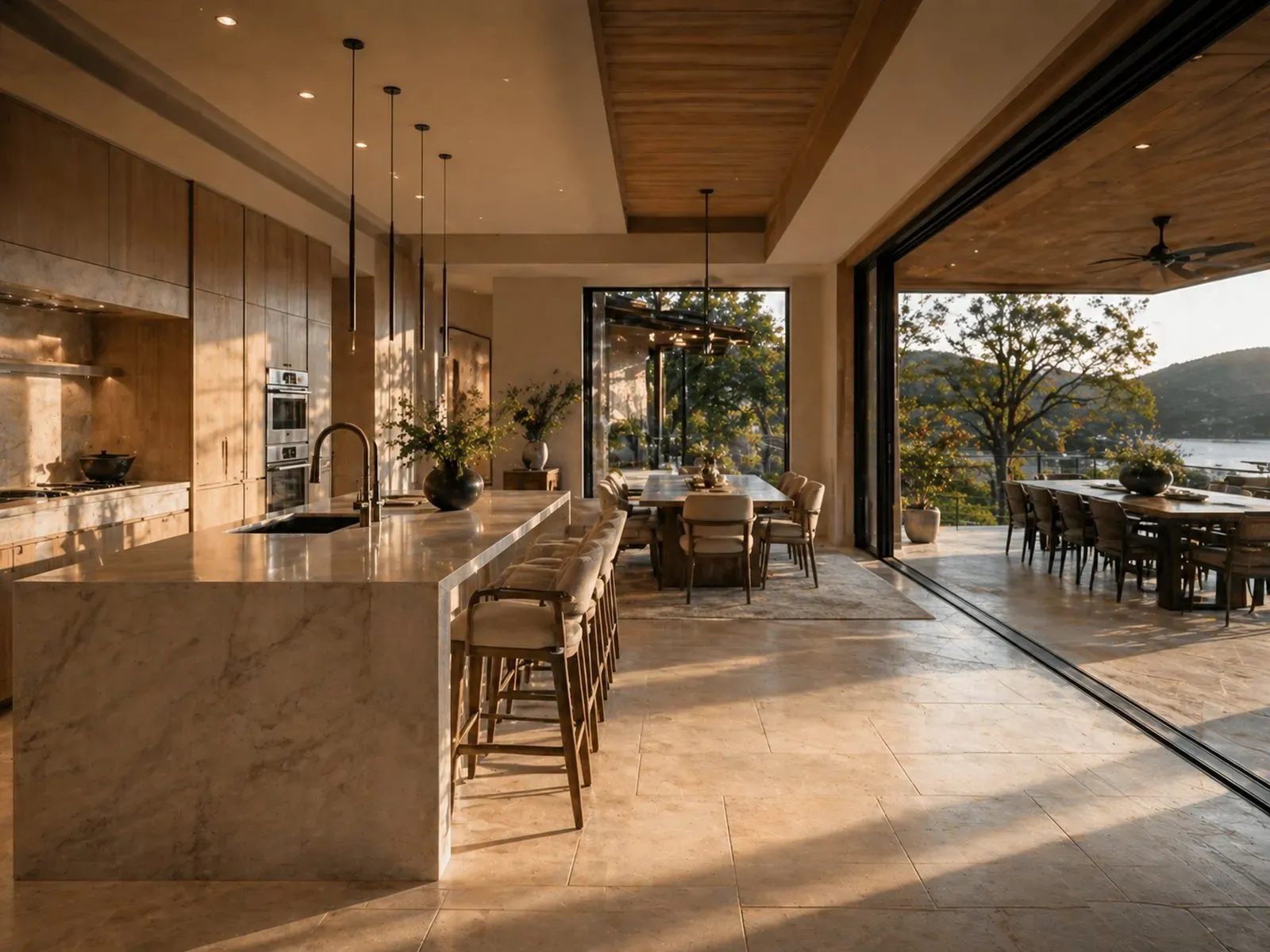
Reverse osmosis is the workhorse of residential drinking-water purification. The system pushes pre-filtered water through a semi-permeable membrane under household pressure. Water molecules pass through; almost everything else – dissolved minerals, lead, sodium, nitrates, fluoride, PFAS, and most VOCs – gets rejected to a drain line. The treated water (called permeate) is collected in a storage tank under the sink and delivered on demand to a dedicated faucet, the refrigerator, or a pot-filler.
Per EPA WaterSense documentation, RO systems can reduce lead, VOCs, PFAS, arsenic, chloride, sodium, and many other contaminants. The standard that governs them is NSF/ANSI 58, which requires every certified RO system to reduce total dissolved solids by at least 75 percent and now enforces a 5 ppb pass/fail criterion for lead reduction. If a system is not certified to NSF/ANSI 58, we do not specify it.
The one trade-off worth knowing about up front is water efficiency. A typical residential RO system produces roughly one gallon of treated water for every four to five gallons sent to drain. On a luxury build that draws from a Hill Country well with a tight production rate, we sometimes specify a higher-recovery permeate pump system to bring that ratio closer to 1:1 – worth the upcharge when the well is the constraint.
Is Reverse Osmosis the Same as Water Purification?
Reverse osmosis is the most common form of residential water purification, but it is not the only one. Purification refers to any process that actively treats water to drinking-quality standards, including RO, ultraviolet disinfection, distillation, and ozone. In residential custom builds, RO and UV cover roughly 95 percent of applications – RO for dissolved solids and chemical contaminants, UV for microbiological ones. When someone says they want a water purification system for home use, they almost always mean an RO unit with optional UV, often with a post-filter polish for taste.
Ultraviolet Disinfection, and When We Actually Use It
UV purification uses a low-pressure mercury lamp emitting at 254 nanometers to disrupt the DNA of bacteria, viruses, and cysts as water passes through a quartz sleeve. There is no chemical added, no flavor change, no waste stream. The system either works or it does not, and modern units have lamp-life sensors and audible alarms when output drops below the certified dose.
The relevant standard is NSF/ANSI 55, and there are two classes worth knowing. Class A units deliver a minimum dose of 40 mJ/cm² and are designed to disinfect water that is microbiologically unsafe at the source – almost every Hill Country well falls into this category. Class B units deliver 16 mJ/cm² and are intended as supplemental treatment for water that has already been tested and deemed safe. For well projects we always specify Class A. For Austin municipal projects we usually skip UV altogether – the city’s chloramine residual is already doing that job.
Are UV Water Purification Systems Worth It?
For homes on a private well, yes – UV is the most cost-effective microbiological safeguard available, with no chemicals and a roughly 12-month lamp replacement cycle. For homes on Austin municipal water, UV is usually unnecessary because the city already disinfects with chloramine that maintains a residual all the way to the tap. The exception is homeowners who want a redundant safeguard against potential main-line contamination events; in that case we will specify a Class B point-of-entry UV after the carbon stage that removes the chloramine.
Point-of-Use Versus Point-of-Entry – Where the Water Purification System for Home Goes
Point-of-use (POU) systems serve a single fixture, almost always the kitchen sink, with branches to the refrigerator ice maker and a dedicated drinking faucet. They live under the counter, take up roughly the volume of a small trash can, and produce 50-75 gallons of treated water per day depending on the membrane. This is the default specification for 90 percent of residential RO projects because the homeowner is only drinking, cooking, and making ice – not bathing in purified water.
Point-of-entry (POE) systems treat every drop of water entering the house. They live in the mechanical room, take up a wall, and require larger membranes, larger storage, and a booster pump to maintain whole-house pressure. We specify POE purification in three scenarios: when the homeowner has a documented sensitivity to chloramine or chlorine and wants it removed before showering; when the well water quality is poor enough that even bathwater needs additional treatment beyond what filtration delivers; and when there is a soaking tub, steam shower, or indoor pool that benefits from purified fill water.
For the typical Austin or Hill Country build, the right answer is POU at the kitchen for purification plus POE for filtration – covered in detail on our whole-house filtration guide. That combination delivers polished drinking water where it matters without the cost or footprint of treating shower and irrigation water to the same standard.
The Austin and Hill Country Water Context

Geography drives the system. Austin Water draws primarily from the Colorado River and treats with chloramine as its residual disinfectant, per the EPA chloramine guidance. Chloramine is safe at the regulated 4 mg/L ceiling, but it is also the reason many Austin homeowners can taste their water – and it is harder to remove than free chlorine. Standard activated carbon will pull it; coconut-shell catalytic carbon does it more thoroughly. We always specify catalytic carbon ahead of any RO or UV stage on a municipal project.
Out in the Hill Country, the story changes entirely. Wells drilled into the Edwards Aquifer typically produce water that tests at 250-350 mg/L total hardness – well above the EPA secondary standard threshold of 200 mg/L – driven by the carbonate geology the aquifer flows through. That hardness is not a health issue, but it absolutely is a scale, soap, and appliance-life issue, and it leaves a chalky residue on glassware and ice. Whole-house softening handles the calcium and magnesium; the RO membrane downstream of the softener strips the remaining dissolved solids and produces water that actually tastes like nothing, which is the point.
Bacteria are the other Hill Country consideration. Surface contamination after heavy rain events is a documented risk on shallow wells, and any well system we specify includes a Class A UV stage downstream of the filtration package. That is not optional; it is the baseline.
The NSF Certifications that Actually Matter
Three NSF/ANSI standards cover almost everything in a residential drinking-water purification package. Each one tests a specific function, and a quality system will carry multiple certifications because the standards do not overlap.
- NSF/ANSI 58 – Reverse Osmosis Drinking Water Treatment Systems. Requires a minimum 75 percent reduction in total dissolved solids and now enforces a 5 ppb pass/fail criterion for lead. This is the gating standard for any RO system.
- NSF/ANSI 55 – Ultraviolet Microbiological Water Treatment Systems. Class A units deliver 40 mJ/cm² for disinfection of microbiologically unsafe water; Class B units deliver 16 mJ/cm² for supplemental treatment of already-safe water.
- NSF/ANSI 53 – Drinking Water Treatment Units, Health Effects. Covers more than 50 contaminant-reduction claims including lead, VOCs, chromium, and cysts. This is what the carbon pre-filter and post-filter stages in a good RO system are certified to.
If a system in our spec is not certified to at least one of these, we replace it. The certifications exist for a reason – they verify the manufacturer’s claims through independent testing, and the verification is what the homeowner is paying for.
Remineralization, Alkaline Systems, and Taste Polishing
A side effect of reverse osmosis is that it strips the water of dissolved minerals – including the calcium and magnesium that give water its familiar mouthfeel. Some homeowners love the clean, neutral taste; others find it flat. For the second group we specify a remineralization post-filter, which adds back a controlled dose of calcium, magnesium, and trace minerals to bring the finished water up to a pleasant 30-60 mg/L total dissolved solids and a slightly alkaline pH of 7.5-8.5.
“Alkaline water” systems are essentially RO units with a remineralization cartridge tuned to push the pH higher. The health claims around alkaline water are not supported by independent research, but the taste is genuinely better for most palates, and the cartridge itself is inexpensive. If a client asks for alkaline water in the kitchen, we add the cartridge. If they do not, we do not.
Integration with Kitchens, Ice Makers, and on-Demand Hot Water

The kitchen package is where purification earns its keep. A properly specified RO system feeds four points: the dedicated drinking-water faucet at the main sink, the prep sink at the island if there is one, the refrigerator water and ice dispenser, and the under-counter ice maker if the home has a dedicated one. Ice from purified water is visibly clearer because there are no dissolved solids to cloud it, and it lasts longer in a glass because it is denser and slower to melt.
On-demand instant-hot taps and pot-fillers benefit from purified feed water for a different reason: no dissolved solids means no scale buildup on the heating element, which dramatically extends the appliance life. We size the RO storage tank – typically 4 to 14 gallons – based on the combined daily draw of all four points and the membrane production rate. Undersized tanks make the system feel slow at peak draw, which is the single most common complaint after a poorly specified install.
Installed Cost Ranges for a Water Purification System for Home
Total installed cost on a full Hill Country well package – filtration, softening, UV, and point-of-use RO – runs in the low five figures, a small percentage of the total project on the custom homes we build. We size and spec the package to fit the architecture, the well, and the household, not a price sheet.
A water purification system for home is a small line item against the overall budget on a luxury custom build, but it is one of the most-touched, most-tasted, and most-noticed systems in the house. We spec it accordingly. For a fuller picture of how this fits inside the rest of the build, our Austin custom home builders overview walks through the systems decisions that happen during design development.
Maintenance – What the Homeowner Actually Has to Do
An RO system is low-maintenance but not no-maintenance. Sediment and carbon pre-filters get changed every 6-12 months depending on usage and feed-water quality. The RO membrane itself lasts three to five years per EPA WaterSense guidance, with the post-filter typically swapped at the same interval. UV lamps are an annual replacement on a hard 12-month cycle regardless of usage, because output degrades even when the lamp is not lit.
On every JDB project, we leave the homeowner with a printed maintenance schedule, the part numbers for every consumable, and the contact for the local service provider who installed the system. We also build accessibility into the cabinetry – the under-sink installation gets a pull-out tray, and the mechanical-room install gets clear floor space in front of the equipment. Buried purification systems get neglected; visible ones get maintained.
How Often Do RO Membranes Need Replacement?
RO membranes typically last three to five years on a properly pre-filtered residential system, per EPA WaterSense. The pre-filters in front of the membrane – sediment and carbon – must be changed every six to twelve months to protect the membrane from premature fouling. Skipping pre-filter changes is the single most common cause of early membrane failure. Some higher-end systems include a TDS meter at the faucet that lets the homeowner monitor membrane performance in real time and time the replacement to actual degradation rather than a calendar.
Does a Luxury Custom Home Need Both Filtration and Purification?
In almost every case, yes. Whole-house filtration handles the bulk problems – sediment, iron, hardness, chlorine or chloramine, and any well-specific contaminants – across every fixture in the home. Point-of-use purification then polishes a small, dedicated stream of water to drinking-quality standards for the kitchen, ice maker, and any other consumption point. Each system does what the other cannot, and the combined cost is small relative to the daily quality-of-life impact. The only common exception is a home on excellent municipal water with a homeowner who prefers the slight chloramine taste; in that case, point-of-use purification is enough on its own.
How We Spec a Water Purification System for Home During Design
Water purification is one of the few systems decisions we like to make during design development rather than at rough-in. The reasons are practical: the mechanical room needs to be sized to fit the equipment with proper service access; the kitchen needs to be designed with a dedicated faucet location and an under-counter footprint; the refrigerator alcove needs a water line stub from the RO tank, not from the cold supply; and the structural slab needs a planned drain location for the RO concentrate line. Catching all of that on the architectural drawings is much cheaper than catching it after framing.
We also coordinate the purification spec with the home’s overall systems package – ICF wall assemblies, the HVAC and dehumidification design, and the rough-in plumbing – so the mechanical room ends up as a single coherent space rather than a collection of after-the-fact additions. On the Hill Country builds, where the well, the pressure tank, the filtration train, and the purification stage all want to live in the same room, that coordination is the difference between a serviceable mechanical room and one the homeowner avoids.
Water Purification System for Home: Frequently Asked Questions
Can a Water Purification System Handle Austin’s Chloramine?
Yes, but only if the system includes a catalytic carbon stage in front of the RO membrane. Standard activated carbon will reduce chloramine, but coconut-shell catalytic carbon does it more completely. Any properly designed Austin municipal purification spec puts catalytic carbon ahead of the membrane to protect it and to remove the residual that gives municipal water its taste.
Will an RO System Remove PFAS from My Water?
Reverse osmosis is one of the most effective residential treatments for PFAS, and EPA documentation specifically lists PFAS among the contaminants RO systems can reduce. For homeowners with documented PFAS exposure concerns, we cross-reference the NSF certified products listing to confirm the specific system carries an NSF/ANSI 58 certification that includes PFAS reduction in its claim sheet.
Do I Need a Whole-House RO System, or Is Under-Sink Enough?
For more than 90 percent of custom builds, point-of-use under-sink RO is the right answer. You only drink and cook with a small fraction of your daily water; the rest is bathing, irrigation, and laundry, where whole-house filtration is sufficient. Whole-house RO is justified when there is a documented sensitivity, a soaking tub or indoor pool that benefits from purified fill, or a poor-quality source that requires it.
How Much Water Does an RO System Waste?
A typical residential RO system sends four to five gallons to drain for every gallon of purified water produced, per EPA WaterSense. A permeate-pump system can bring that ratio close to 1:1 by recovering the pressure differential, and we usually specify one on Hill Country well systems where the well’s recovery rate is the constraint.
Does Purified Water Taste Different from Filtered Water?
Yes. RO removes essentially all dissolved minerals, which leaves the water with a clean, neutral, almost flavorless profile. Some palates prefer it; others find it flat. A remineralization post-filter adds back a controlled dose of calcium and magnesium and brings the water to a slightly alkaline pH, which most homeowners describe as more pleasant for drinking and noticeably better for coffee and tea.
Can the Purification System Tie into a Smart Home for Monitoring?
Modern higher-end RO systems include built-in TDS sensors, flow meters, and lamp-life monitoring that can be wired into the home’s automation platform for filter-change alerts and performance trending. We coordinate this with the low-voltage scope during design so the sensors land in the same panel as the rest of the mechanical-room monitoring.
Specifying a Water Purification System for Your Build?
We design the full mechanical package (well, filtration, softening, RO, UV, and the kitchen plumbing that ties to it) on Austin and Hill Country custom homes. If you’re starting a project, we’d love to talk.
Talk with our team about your build →
Planning a custom home?
Our architects and builders work as one team, from the first conversation to the day you move in.